How to Read a Trail

How to Read a Trail

TRAILHEAD · CRAFT

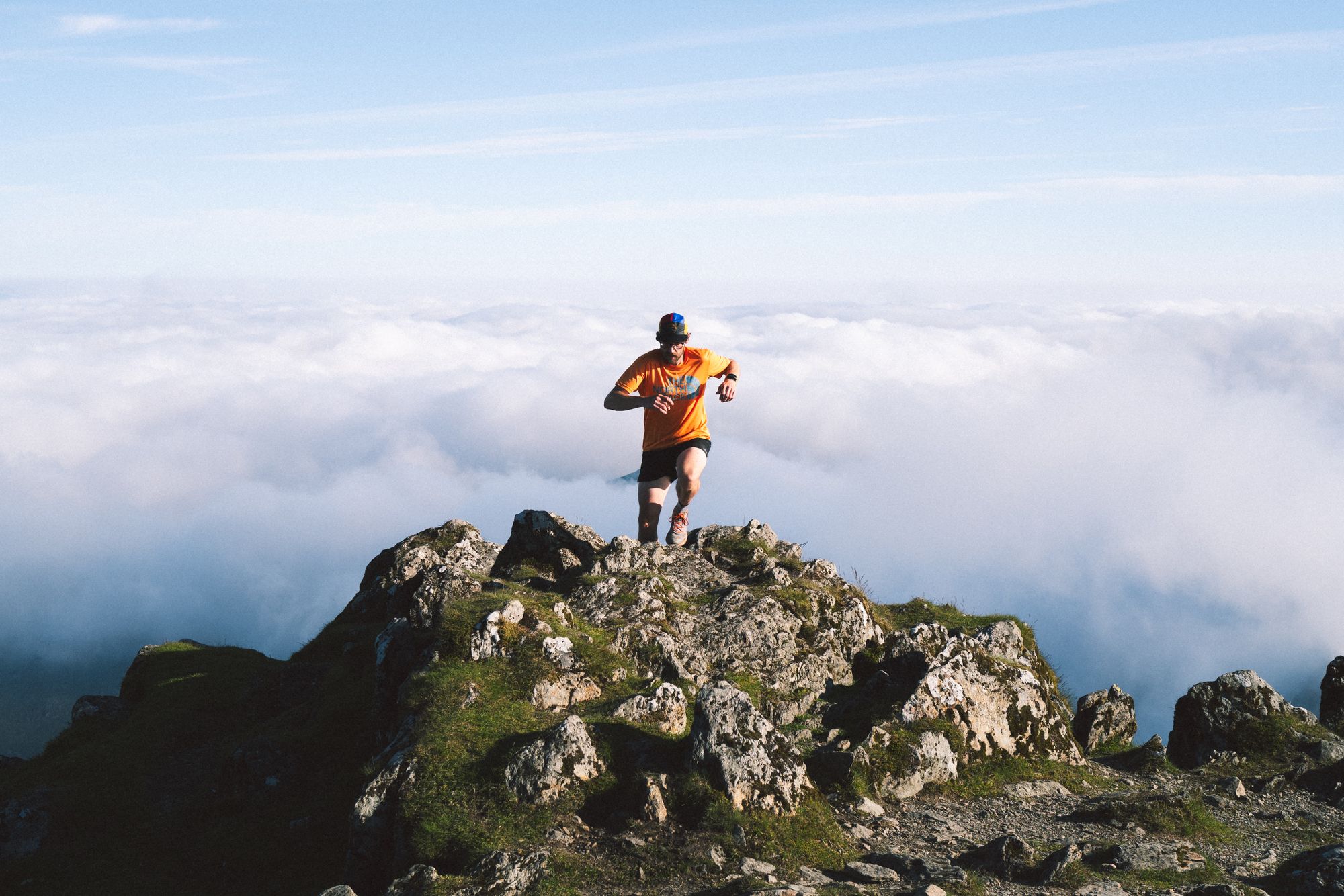
Trail runner ascending a rocky mountain peak, eyes forward, reading technical terrain

The first time most road runners hit singletrack, they spend the entire run looking at their feet. This is the right instinct with the wrong timing. Your eyes need to be three to five steps ahead of your feet, processing terrain, selecting footing, making adjustments, while your feet operate on information your eyes gathered three steps ago. It is a split-attention skill, and like most skills, it is not natural. It is trained.

Trail reading is what separates runners who survive technical terrain from runners who move through it. Not speed. Not fitness. Pattern recognition applied to ground conditions, and it determines everything: your pace, your injury rate, your energy expenditure, your ability to run the second half of a trail as fast as the first. Whether you are wading the Zion Narrows or picking a line down a Hurricane Ridge ridgeback, the same skill applies.

The Five Things Your Eyes Are Looking For

1. Footing quality: Is the surface stable? Loose rock, wet root, sand over hardpack, and compressed leaves over ice all look similar from three steps out. Train yourself to see the shine of wet rock versus the dullness of dry.

2. Camber: Is the trail tilting laterally? Identify the camber angle early enough to adjust your foot plant before you are on it.

3. Obstacles: The roots and rocks that catch runners are never the ones two feet away; they are the ones that appeared to be part of the trail surface from further back.

4. Surface transition: The shift from hardpack to sand, from dirt to rock, from grass to root. Your foot needs a different strike on each surface; the transition is where most ankle rolls happen.

5. The line: Where is the optimal path through the next 10 to 15 feet? Trail running is a continuous problem of line selection, and the runners who move fastest are the ones solving it furthest in advance.

The common mistake is fixation: locking eyes on a specific obstacle and running into it because your feet follow your gaze. Look where you want to go, not at what you want to avoid. Your feet will find the obstacle on their own if you give them the information they need in time.
"Trail running is a continuous problem of line selection. The runners who move fastest are the ones solving it furthest in advance."
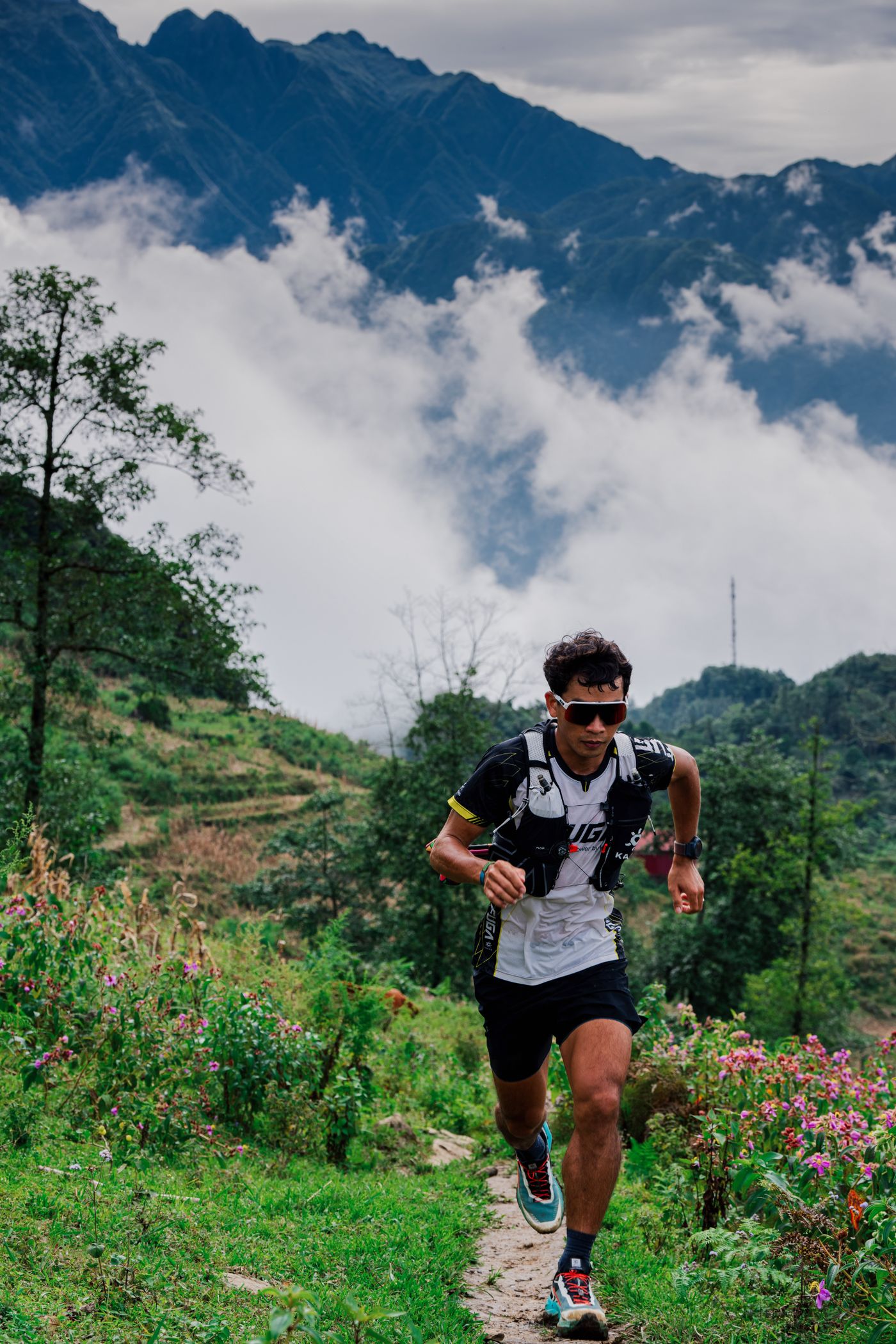
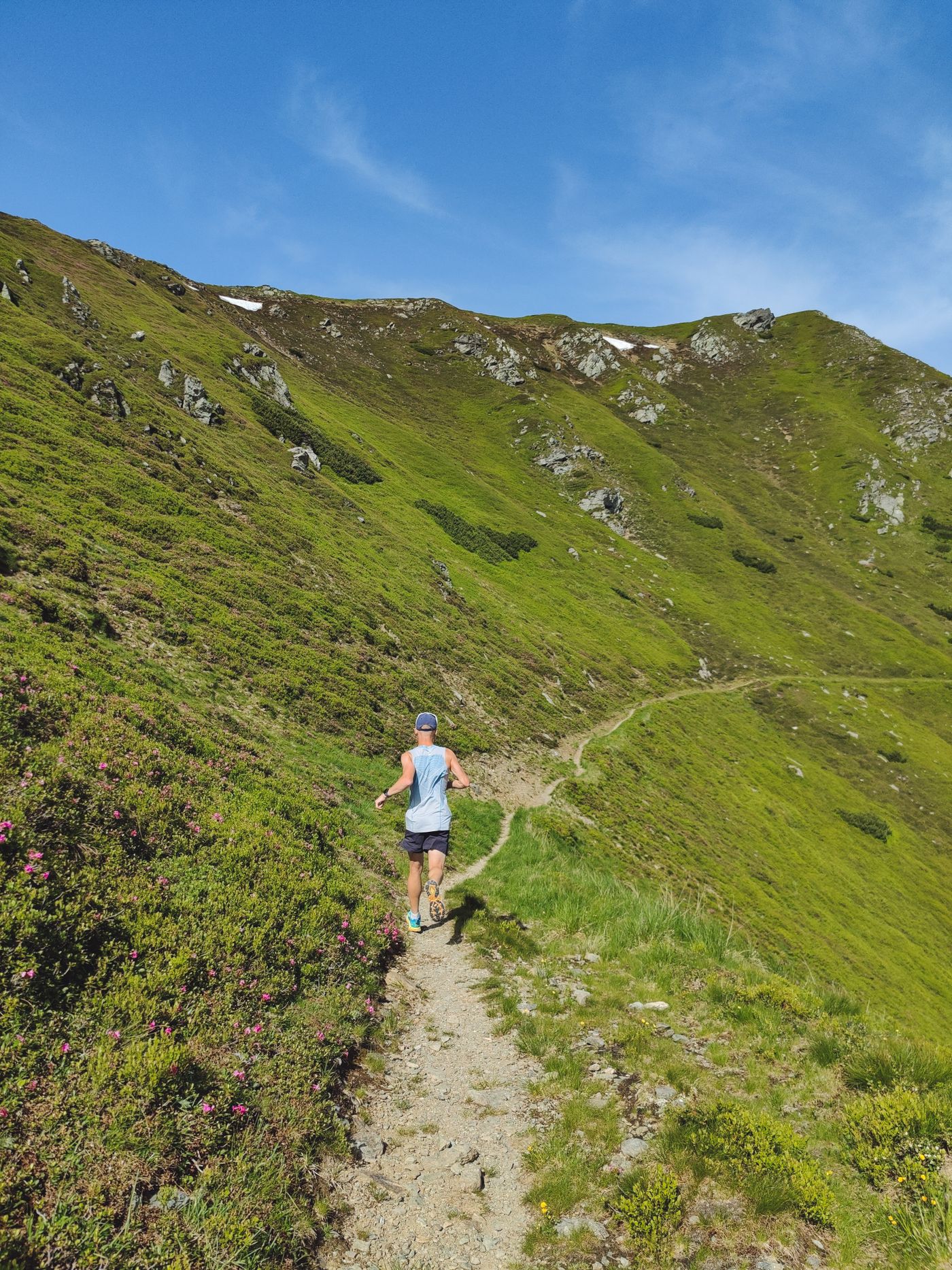
Trail runner in full stride through a mountainous landscape, eyes ahead, reading the terrainTrail runner moving through green mountain landscape, deliberate line selection on technical singletrack

Peripheral vision is underused by new trail runners. Your central focus should be three to five steps out; your periphery handles the immediate terrain. Train this by running familiar trails without looking directly at your feet at all. Your body already knows how to walk without watching the ground. Trail running asks it to do the same thing, faster, on unstable surfaces.

The descent is where trail reading matters most and where most runners earn their injuries. Acceleration compresses your reaction time. A root that gave you half a second at flat-trail speed gives you a fifth of a second at full descent pace. You need to be reading further ahead, not at the same distance, when you are going faster.
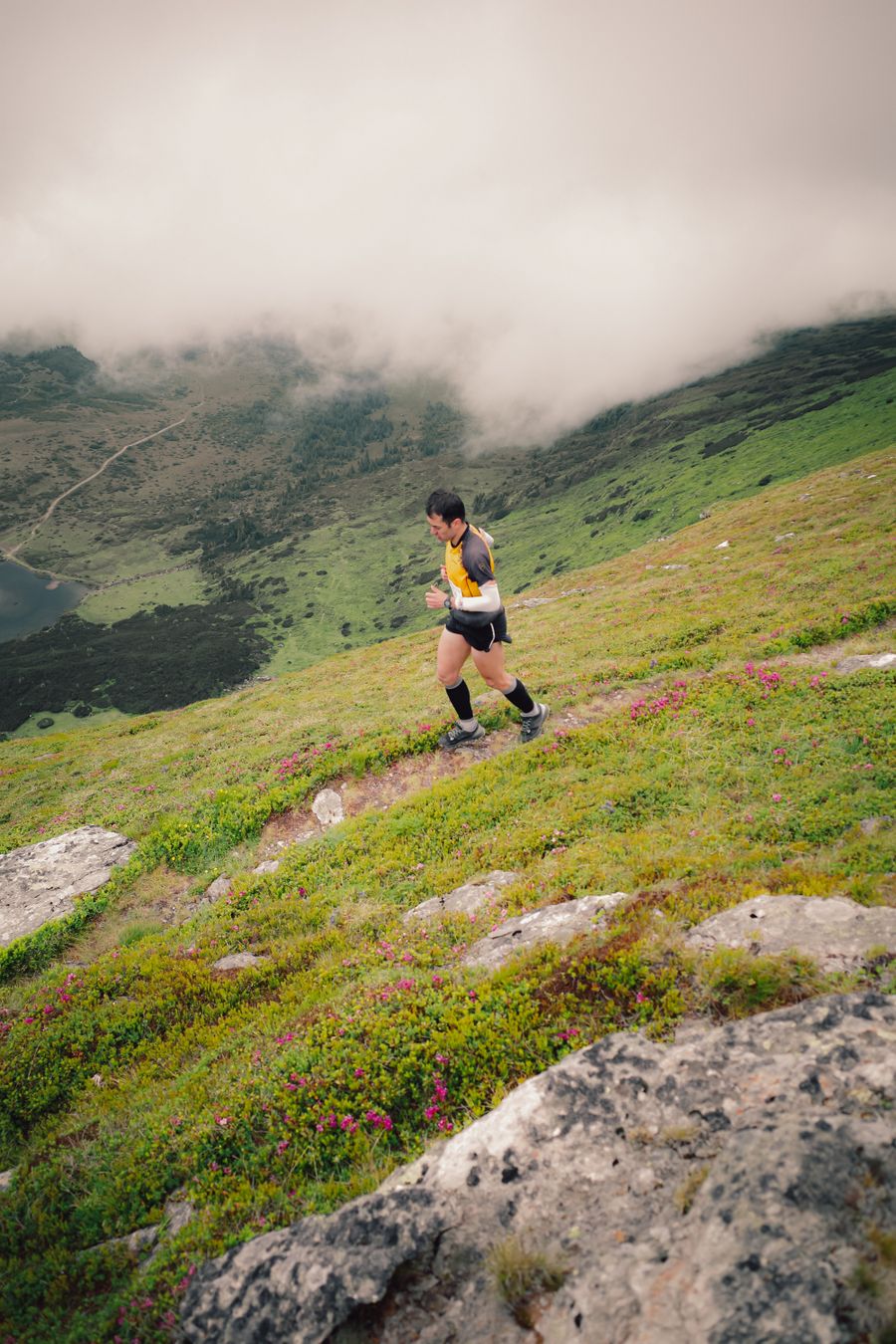
Runner on technical mountain trail, controlled line selection on steep terrainMountain runner on exposed singletrack, body low and eyes forward, reading what is ahead
Trail runner on a rocky mountain peak, the summit earned through consistent terrain readingTrail runner ascending through mountain landscape, eyes three steps aheadRunner on green mountain trail, the correct line chosen fifteen feet in advance
Practice Drill

On a trail you know well, set one rule: your eyes cannot land on a spot less than three steps ahead of your current foot strike. Run a mile at easy pace following this rule only. The discomfort you feel is the correct training stimulus. After three or four sessions the three-step scan becomes automatic, then you extend it to five.

The best trail runners look relaxed because they are not surprised. The ground is doing exactly what they expected it to do, because they read it fifteen feet ago. That composure is not a personality trait. It is a trained perceptual skill. You can build it on any trail, on any run, starting with the next one.

Craft Skill Trail Running TRAILHEAD Training

Older Post Newer Post

Leave a comment

TRAILHEAD A Trail Running Series by LLRULE

RSS

Tags

A hiker climbing iron rungs bolted into granite cliff on the Precipice Trail, Acadia National Park, Maine
Acadia Cadillac Mountain Coastal Hiking Maine National Park Precipice Trail Trail Running TRAILHEAD

Acadia: The First Light

TRAILHEAD · ACADIA NATIONAL PARK · MAINE Between early October and early March, the first sunlight to touch United States soil lands on the summit...

Read more
A hiker crosses a suspension bridge on the Wonderland Trail, Mount Rainier National Park, Washington
Hiking Mount Rainier National Park Trail Running TRAILHEAD Volcano Washington Wonderland Trail

Mount Rainier: Ninety-Three Miles Around a Volcano

TRAILHEAD · MOUNT RAINIER NATIONAL PARK · WASHINGTON Mount Rainier is a stratovolcano, which is a useful fact to carry with you on the Wonderland...

Read more
A climber on the Chasm View section of Longs Peak, Rocky Mountain National Park, Colorado
14er Alpine Colorado Hiking Longs Peak National Park Rocky Mountain Trail Running TRAILHEAD

Rocky Mountain: The Air Above Twelve

TRAILHEAD · ROCKY MOUNTAIN NATIONAL PARK · COLORADO The alarm goes off at 2:30 a.m. in Estes Park, and you are already calculating: the trailhead...

Read more
Two backpackers on trail with Grand Teton rising behind them, Grand Teton National Park, Wyoming
Cascade Canyon Grand Teton Hiking National Park Trail Running TRAILHEAD Wilderness Wyoming

Grand Teton: No Foothills, No Warning

TRAILHEAD · GRAND TETON NATIONAL PARK · WYOMING Most mountain ranges give you foothills first. A gradual grade up through lower elevations, through transitional terrain,...

Read more
A person exploring an ice cave in Glacier National Park, Montana
Glacier Highline Trail Hiking Montana National Park Trail Running TRAILHEAD Wilderness

Glacier: Running with Bears

TRAILHEAD · GLACIER NATIONAL PARK · MONTANA You carry bear spray on your hip from the moment you step out of the car at Logan...

Read more
Yosemite: Above the Valley Floor
California Half Dome Hiking National Park Trail Running TRAILHEAD Yosemite

Yosemite: Above the Valley Floor

TRAILHEAD · YOSEMITE NATIONAL PARK · CALIFORNIA The trail up Half Dome begins in shadow. At the Happy Isles trailhead, before dawn has pushed full...

Read more
Hikers descending the South Kaibab Trail, Grand Canyon National Park, Arizona
arizona camping grand canyon national parks rim-to-rim southwest trail running

Grand Canyon: Rim to River to Rim

TRAILHEAD · GRAND CANYON NATIONAL PARK · ARIZONA Every trail run begins with a descent. The Grand Canyon is the only one in America where...

Read more
The Lost Coast: California's Most Remote Run
California Coastal Humboldt TRAILHEAD Wilderness

The Lost Coast: California's Most Remote Run

The highway couldn't follow this stretch of California coast. The terrain was too steep, the cliffs too unstable. So they built the road inland and...

Read more
Sedona After Sunrise: Red Rock Before the Heat
Arizona Desert Red Rock Sedona TRAILHEAD

Sedona After Sunrise: Red Rock Before the Heat

The red rocks of Sedona hold heat from the day before. Run them at first light, when the temperature is still in the fifties and...

Read more
Malibu Creek: The Santa Monicas' Best Kept Secret
California Los Angeles Malibu Santa Monica Mountains TRAILHEAD

Malibu Creek: The Santa Monicas' Best Kept Secret

Twenty-six miles from the Pacific Coast Highway, Malibu Creek State Park holds 4,000 acres of California chaparral, volcanic rock, creek crossings, and a trail system...

Read more
Columbia River Gorge: Wind, Basalt, and Wildflowers
Columbia River Oregon Pacific Northwest TRAILHEAD Washington Waterfalls

Columbia River Gorge: Wind, Basalt, and Wildflowers

The Columbia River Gorge holds more waterfalls per square mile than anywhere in North America. In spring, the basalt walls run with snowmelt and the...

Read more
Zion Narrows slot canyon
Canyon Desert TRAILHEAD Utah Zion

Zion Narrows: The River Is the Trail

There is no trail through the Zion Narrows. There is only the Virgin River and the canyon walls above it — a thousand feet of...

Read more
Hurricane Ridge alpine trail in Olympic National Park
Alpine Olympic Peninsula Pacific Northwest TRAILHEAD Washington

Hurricane Ridge: Above the Clouds

The Olympic Mountains hold snow until July. The views from Hurricane Ridge reach across the Strait of Juan de Fuca into Canada. This is the...

Read more
Point Reyes coastal trail in morning fog
California Coastal Marin County Point Reyes TRAILHEAD

Point Reyes: Running the Edge of the World

Fog. Elk. A two-hundred-foot cliff above the Pacific. The Bear Valley to Arch Rock corridor is one of the most dramatic trail runs on the...

Read more
Yosemite Sentinel Dome
Exploration TRAILHEAD Yosemite

Yosemite Sentinel Dome

At 8,122 feet, Sentinel Dome delivers one of the most rewarding views in the Sierra Nevada — and only asks two miles from you to...

Read more
Running Yosemites Most Scenic - Mirror Lake Loop
Exploration TRAILHEAD

Running Yosemites Most Scenic - Mirror Lake Loop

Mirror Lake isn't a destination — it's a mirror. Five miles through the floor of Yosemite Valley, with Half Dome doubling itself in still water.

Read more
Chase the Falls: Running Whatcom Falls Park
Exploration TRAILHEAD

Chase the Falls: Running Whatcom Falls Park

The falls are the destination, but the miles getting there are the point. A technical loop through old-growth forest, creek crossings, and stone bridges.

Read more
TRAILHEAD: Running the Interurban Trail
Exploration TRAILHEAD

TRAILHEAD: Running the Interurban Trail

Sixteen miles of converted rail corridor through Bellingham, Washington. A case for the urban trail as a form of moving meditation.

Read more
TRAILHEAD: Stimpson Family Nature Reserve
Exploration TRAILHEAD

TRAILHEAD: Stimpson Family Nature Reserve

A thousand acres of old-growth cedar and fir, ridgelines that open into sky, and a trail system built for those who want to disappear into...

Read more
Ridgeflow™: Where Perseverance Meets Performance
Community Resilience Performance Gear Ridgeflow

Ridgeflow™: Where Perseverance Meets Performance

The Ridgeflow silhouette was built for one purpose: outlast the terrain. Engineered for the runner who doesn't stop when the trail gets hard.

Read more
Joshua Tree: Where Time Bends and Creativity Breaks Open
Exploration TRAILHEAD

Joshua Tree: Where Time Bends and Creativity Breaks Open

In the Mojave, the landscape doesn't just challenge you — it changes you. A run through Joshua Tree is a reckoning with silence, scale, and...

Read more
TERRAIN
TRAILHEAD
THE DRIFT
DISPATCH